
One of my favorite things to do is camping. Hubs and I visited a new campground and it did not disappoint. Make sure to check out my vlog on Youtube to watch a more detailed tour.
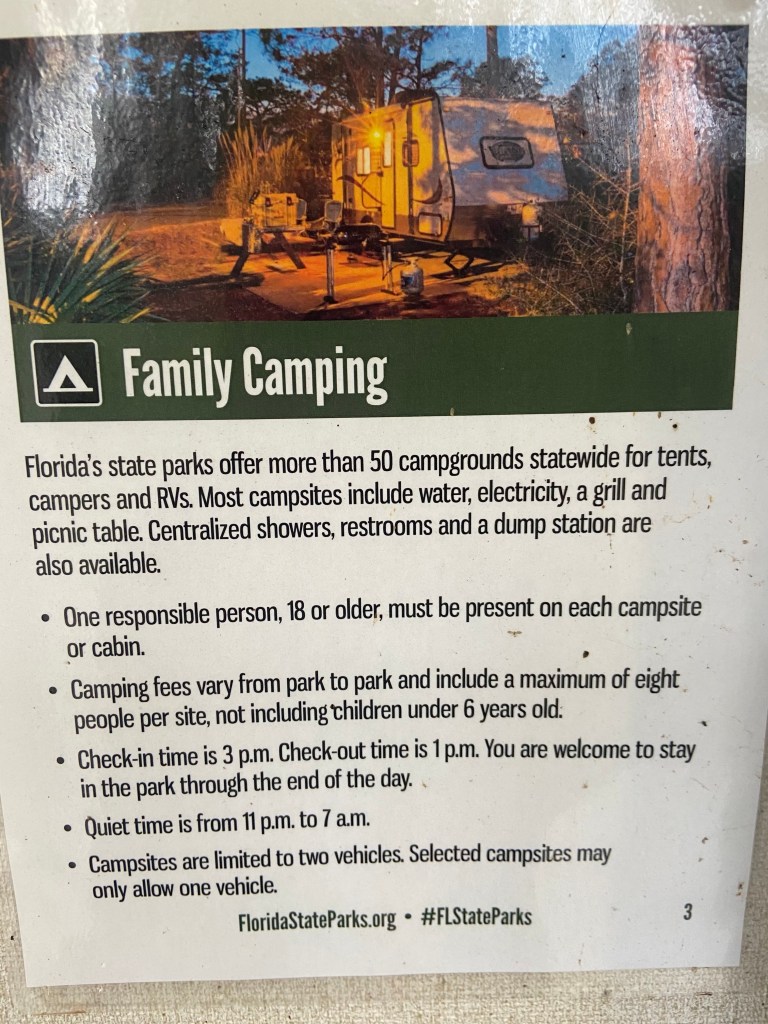
We stayed for 2 nights. Entrance fee was $6. I don’t remember if you get in free if you’re camping there or not. Make sure to double check. We paid $20 per night + $6.70 per night (which is a non-refundable reservation fee) for a site with water and electricity.
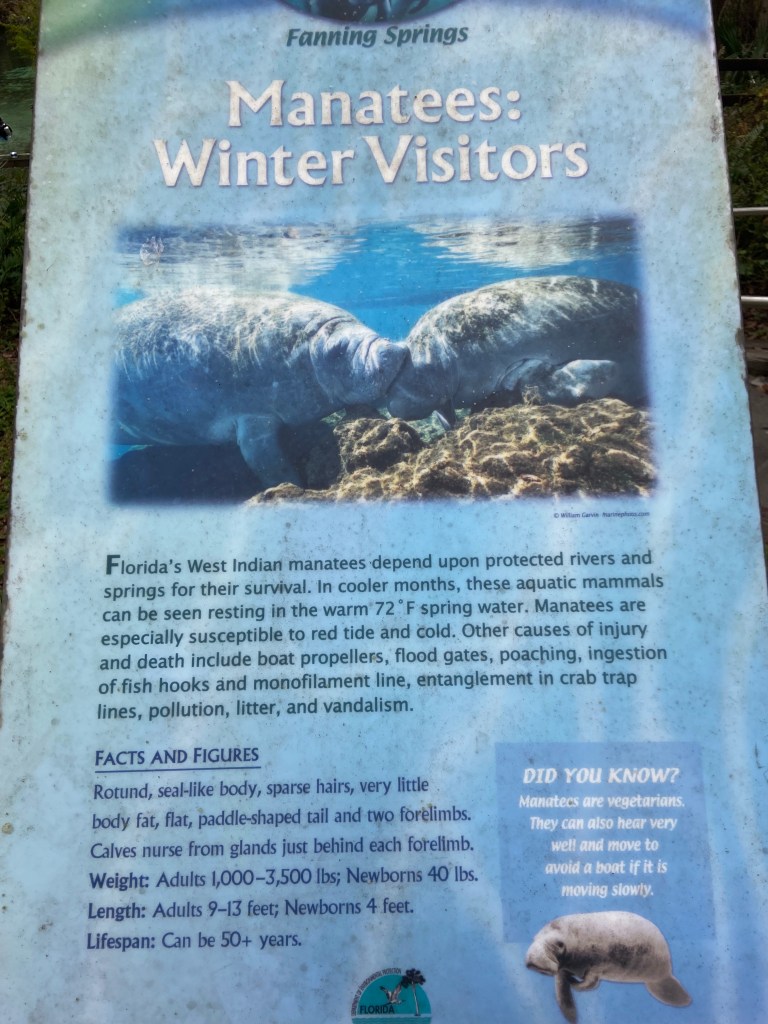
I believe we paid $55 to rent a kayak for 2 hours. Totally worth it since we were able to see the manatees when we kayaked out to the Suwannee River.
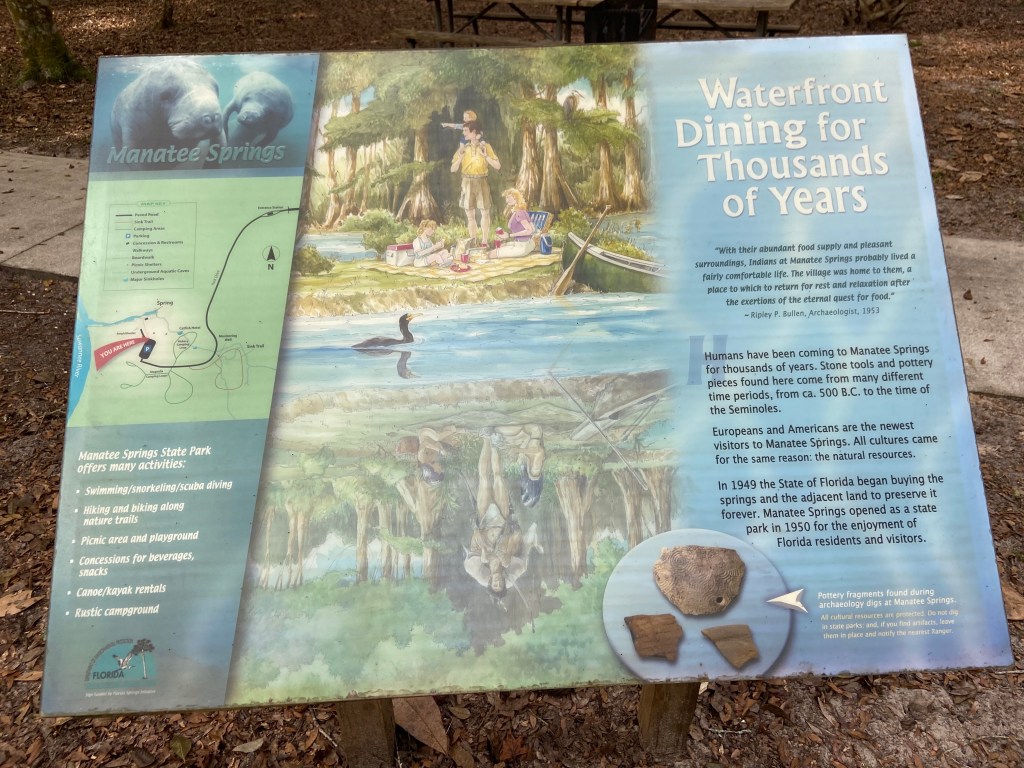
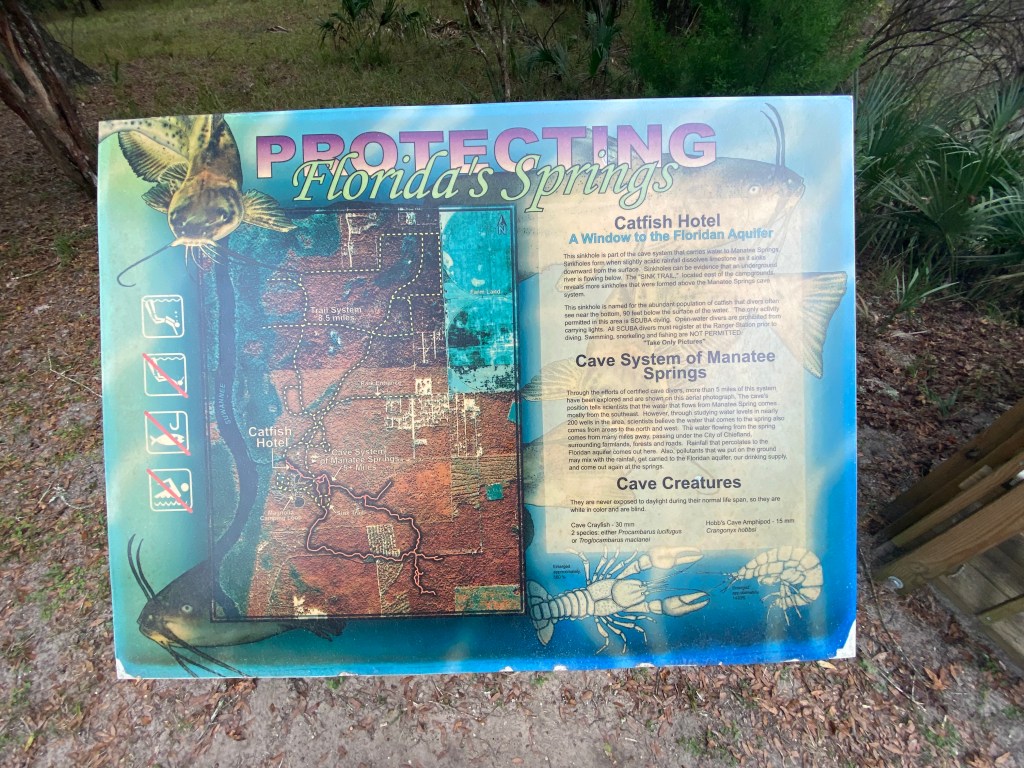
Information taken from the website. “Manatee Springs State Park proves boardwalks aren’t only for the beach. The park’s 800-foot boardwalk runs through a majestic cypress forest overlooking one of Florida’s breathtaking first-magnitude springs. People have enjoyed the cool waters of Manatee Springs for more than 10,000 years, from early Paleo Indians to modern park visitors. The first-magnitude spring releases an astounding 100 million gallons of water daily. This makes it a popular cooling-off spot and a great place to stroll on the park boardwalk and gaze into watery depths. True to its namesake, manatees can be seen in the cooler months, and birds, mammals and fish are spotted year-round. The park also offers 8.5 miles of nature trails and a safe connection to the 32-mile Nature Coast State Trail, so don’t forget to bring your bicycles”.
All of the information needed is provided in the link I’m including. Manatee Springs


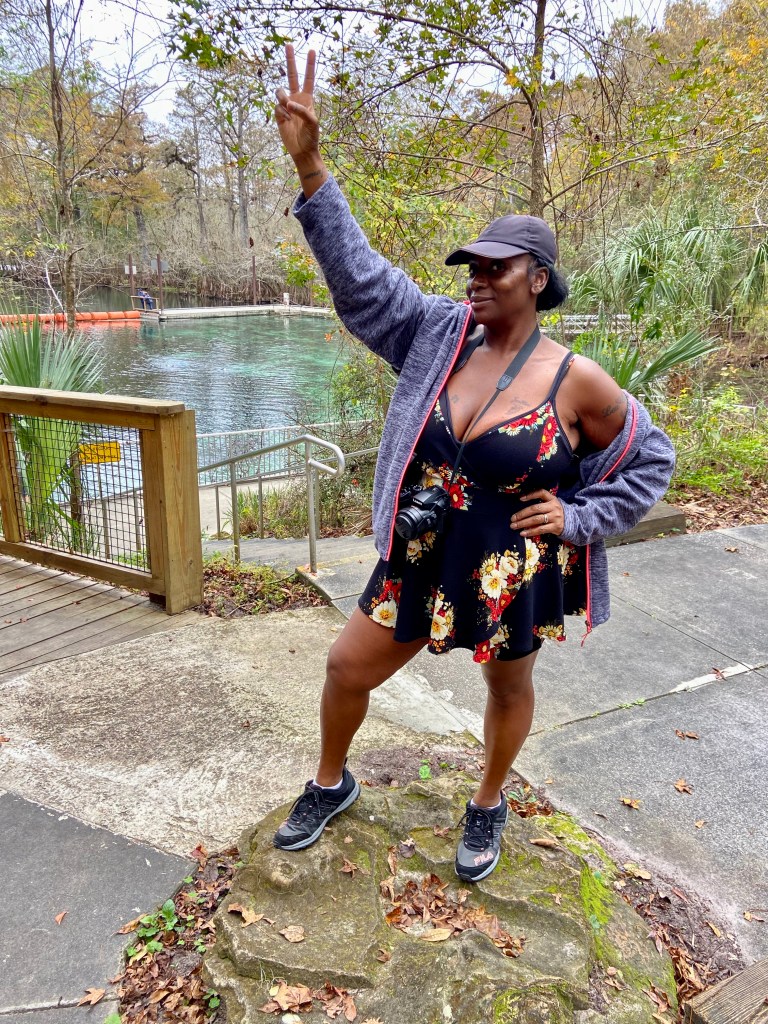
We decided to head over to Fanning Springs State Park since it was on the way as we headed home. It’s just as beautiful. Please visit the link to plan your visit. Fanning Springs State Park
Taken from website. “Nearly 14,000 years ago Paleo-Indian people first began to filter into the Fanning Springs area as confirmed by the several aboriginal sites found at the park. Over the next 2,000 years with the warming climate, Native Americans learned to rely on the area’s animals, fish, shellfish and wild plants for survival.
In 1838 during the Second Seminole War, Fort Fanning, named in honor of Colonel Alexander Campbell Wilder Fanning (1788-1846), was built nearby. The remnants of the actual fort have long since disappeared due to the warm and humid climate. Fanning Springs also served as the local steamboat landing carrying products to and from local plantations until railroads crossed the Suwannee River in the early 1900s. The land has been used primarily for recreation since the mid-1900s”.




 A Wildflower Heart